Pisces Season Bonus Materials
Scroll through to access all of the Pisces section bonus materials.
Pisces Season Playlist
Two Hearts and No Brain - Kane Strang // Gutter Girl - Hot Flash Heat Wave // Crybaby - Destroy Boys // Happy Idiot - TV on The Radio // I’m Not in Love - Kelsey Lu // Get Me - Justin Bieber ft Kehlani // After Hours - The Weekend // Ivy - Frank Ocean // Oh Baby - LCD Soundsystem // Dreamland - Glass Animals // Pisces - Miranda Glory // Yam Yam - No Vacation // There is a Light That Never Goes Out - The Smiths // Impossible Tracks - The Kills // All Blacked Out - Girlpool
Meet the Court
This Pisces moved through the world spreading compassion and empathy everywhere he went. Meet the Knight of Cups (IRL).
Meet the Knight of Cups (IRL) - Fred Rogers
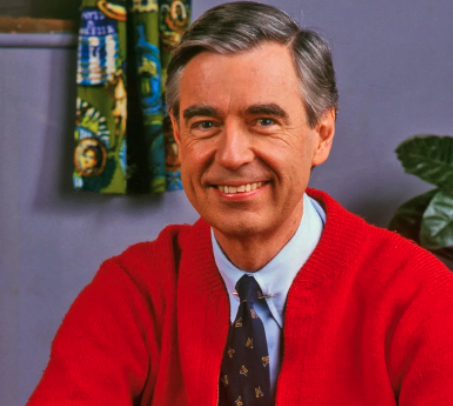
Ok, so I am a major Fred Rogers fan. Growing up in the Pittsburgh area, I watched so much Mister Rogers' Neighborhood at my grandparents' house.
Rogers was born on March 20, 1928, in Latrobe, Pennsylvania. He was a Taurus Rising with an 11th House Pisces stellium including his Sun, Moon, Mercury, and Venus, plus an Aquarius Mars — and he is, without a doubt, our Knight of Cups IRL.
Rogers was an only child until his family adopted his sister when he was 11. After high school, he attended Dartmouth briefly before transferring to Rollins College in Florida. A skilled pianist, he graduated with a degree in music composition — very Piscean, since Neptune and Pisces placements often denote musical talent.
In 1952, he married his wife, Joanne, and they had two sons together.
Rogers was fascinated by television and landed his first industry job as a floor manager for a music program on NBC. Years later, he moved into programming at WQED in Pittsburgh, where he got his start in children's television. A skilled puppeteer, he enjoyed bringing some of his favorite puppets from home into the shows, something he later carried over to Mister Rogers' Neighborhood.
The character of Mister Rogers first appeared in the early '60s in Canada, but Mister Rogers' Neighborhood as we know it today didn't air in Pittsburgh until 1966. The program always opened with Rogers putting on a sweater — fun fact, every sweater he wore on the show was made by his mother.
The show had a massive impact, and PBS picked it up in 1968. It touched on subjects no other children's programming was addressing at the time. Rogers sought to teach kids that the world wasn't always an easy place; he sang to them about what to do with anger and sadness, validated their feelings, and encouraged healthy emotional expression. He exuded empathy and compassion. The show also hosted guests who took on serious topics like race and gender inclusion, divorce, and even war. Rogers taught children how to handle big feelings like anger and jealousy, leaving his mark on the world by talking to kids about real problems — gently, and right at their level.
We've also discussed Pisces season as a kind of liminal space, and Rogers famously valued and used silence in his work. It feels like time stands still in his neighborhood. Watch old episodes and you'll notice how much silence there is — silence while he shows us how to change a lightbulb, silence while he feeds the fish, silence while he builds a pyramid out of paper cups. He also routinely asked viewers to take ten seconds of silence to "think of the people who loved them into being." Rogers understood the power of silence and liminal space, and he modeled it for all of us.
Rogers' life's work was helping children, and his influence reached well beyond his long-running PBS show (1968–2001). In the late '60s, he became chairman of a White House forum on child development, and you can find videos of him in action on YouTube today — some of the most moving speeches you'll ever see. I can't watch them without tearing up. During the Nixon era, when PBS funding was being massively cut, there were Senate hearings where the network had to make its case for continued funding. Executive after executive spoke to an unimpressed Senator Pastore with no luck. Finally, Fred Rogers spoke. It's incredible — you can watch the stern look melt off Pastore's face as Rogers reads "What Do You Do with the Mad That You Feel?", and after a moment of silence, Pastore famously exclaims, "Well, I think it's wonderful. Looks like you just earned the $20 million."
Shortly after filming his final episode of Mister Rogers' Neighborhood in 2001, Rogers was diagnosed with stomach cancer. He passed away at home in 2003, with his wife, Joanne, by his side.
Fred Rogers received far too many awards throughout his life to list here. He earned multiple Emmys, Grammys, and philanthropic awards, along with nearly 50 honorary degrees. In 2002, he was awarded the Presidential Medal of Freedom, the nation's highest civilian honor.
His legacy lives on through the Fred Rogers Company and the various philanthropic organizations created in his honor, still operational today. Fittingly, our King of Cups IRL, Tom Hanks, played Fred Rogers in 2018's A Beautiful Day in the Neighborhood, a biographical drama based on his life.
Rogers taught us how to be good neighbors. He was a friend and helper to many people he'd never meet, teaching generations of children about emotional intelligence and spreading a heartfelt message about showing compassion for one another. That's precisely what makes him our Knight of Cups IRL.