Capricorn Season Bonus Materials
Scroll through to access all of the Capricorn section bonus materials.
Capricorn Season Playlist
Push - Jax Anderson ft. Tunde Olaniran // Doll Hairs - Todrick Hall ft. Shangela Laquifa // Saturn Return - She Keeps Bees // Break My Heart - Dua Lipa // After the Storm - Kali Uchis ft. Tyler The Creator // BOSS - The Carters // Soldier On - The Temper Trap // Ladders - Mac Miller // Paper Planes - M.I.A. // Money Trees - Kendrick Lamar ft. Jay Rock // Excellent - Princess Nokia // Industry Baby - Lil Nas X ft. Jack Harlow // I’m Clean - Priests // Coffee - Sylvan Esso // Sadmoney - Uffie
Meet the court
These Capricorns are simultaneously down to earth and larger than life…
Meet the Page of Pentacles (IRL) - Nicolas Cage
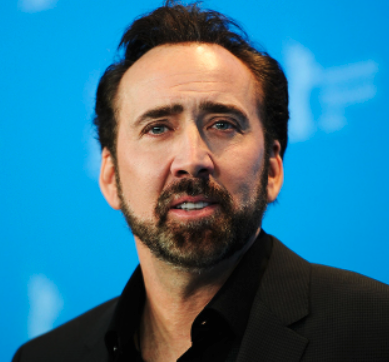
Nic Cage is our Page of Pentacles IRL. On January 7, 1964, he was born in Long Beach, California. Cage is a Sagittarius Rising with a Capricorn stellium in his first house containing his natal Sun, Mercury, and Mars, plus Uranus and Pluto in Virgo and a Libra Moon. It's a very earth-heavy chart that perfectly represents the Page of Pentacles.
Cage was born into Hollywood royalty as the nephew of legendary director Francis Ford Coppola, and he often visited his uncle's San Francisco home as a child. As a teen, he took a summer class at the American Conservatory Theatre in San Francisco and was bitten by the acting bug, soon dropping out of high school to start his acting career. He changed his name from Nicolas Coppola to Nicolas Cage so he wouldn't benefit unfairly from his family's status in the industry — a very Page of Pentacles move. He wanted to earn his success on his own merit.
Cage has had a massive career, with far more work than I could list here, but here are the highlights: Fast Times at Ridgemont High (1982), Valley Girl (1983), Racing with the Moon (1984), Birdy (1984), Peggy Sue Got Married (1986), Raising Arizona (1987), Moonstruck (1987), Vampire's Kiss (1989), Wild at Heart (1990), Honeymoon in Vegas (1992), Leaving Las Vegas (1995), The Rock (1996), Face/Off (1997), Con Air (1997), City of Angels (1998), Snake Eyes (1998), 8MM (1999), Gone in 60 Seconds (2000), The Family Man (2000), Matchstick Men (2003), National Treasure (2004), The Weather Man (2005), Lord of War (2005), The Wicker Man (2006), Ghost Rider (2007), Grindhouse (2007), Kick-Ass (2010), Pig (2021), and The Unbearable Weight of Massive Talent (2022).
And that doesn't even cover half of what he's done. He's averaged around four films a year, every year, since 1982. The man works. Part of that drive was about digging himself out of tax debt — more on that shortly.
To say Cage is dedicated to method acting and unconventional role prep is a bit of an understatement. But there's a common thread running through his work: regardless of genre, he really goes for it. Every performance is over the top, fully committed emotionally and physically, whether it's a rom-com, a thriller, or a drama.
He's reportedly had two teeth pulled for his role in Birdy, slashed his arm for Racing with the Moon, and swallowed a live cockroach for Vampire's Kiss. He's also been said to have destroyed a street vendor's remote-controlled car in a fit of rage while preparing for The Cotton Club (1984). He commits with his whole body — big earth sign energy.
Cage is equally known for his peculiar taste in collectibles, which eventually contributed to his financial undoing. He's purchased islands, a collection of castles, albino king cobras, a dinosaur skull, a pyramid-shaped tomb, and shrunken heads, among other things.
In 2009, the IRS hit him with a $6.3 million tax lien, and he took on every role he could to climb out of debt, selling off parts of his unusual collections while other items were repossessed.
Cage is also one of the most meme-ified people in Hollywood, and he doesn't seem to mind. Behind the serious Capricorn persona, he's clever and whimsical — in recent years, his Reddit AMAs have shown him to be charming, thoughtful, and surprisingly light.
The love of material wealth, the extreme work ethic, the childlike sense of humor and creativity filtered through earthy Capricorn energy — his entire demeanor just exudes Page of Pentacles.
Meet the King of Pentacles (IRL) - Dolly Patron

On January 19, 1946, Dolly Parton was born in Locust Ridge, Tennessee. She's a Virgo Rising with a Taurus Midheaven, a 5th House Capricorn stellium including her Sun, Mercury, and Venus, and a 12th House Leo Moon and Pluto. She's the perfect blend of earth/fire energy to represent the King of Pentacles.
Parton was one of 12 children, raised poor in the hills of Appalachia. She came from a musical family who taught her the craft, and she grew up participating in church music programs. She got her first guitar at just ten years old and started performing on TV and radio in Tennessee, debuting at the Grand Ole Opry at 13.
After high school, she moved to Nashville to pursue music full-time and landed a gig on The Porter Wagoner Show. The public fell in love with her — she was warm, intelligent, talented, and had a natural instinct for business.
She started her own publishing company and record label and, to this day, retains all the rights to her songs. As she's put it: "As soon as I could, I started my own publishing company and got my record label. I think it's important, if you can, to keep all of your goods close to home where you can control them and know what's happening with them." That move has paid off enormously. Her hit "I Will Always Love You" was famously covered by Whitney Houston for The Bodyguard soundtrack, earning Parton $10 million off the cover alone. In a now-famous interview with Anderson Cooper, she showed off her grounded sense of humor, never one to shy away from poking fun at herself: "When Whitney did it, I got all the money for the publishing and for the writing, and I bought a lot of cheap wigs."
Parton has also become known for her signature look — big hair, showy outfits, long nails, and heavy makeup. As she's famously explained: "I make jokes about it, but it's the truth that I kind of patterned my look after the town tramp. I didn't know what she was, just this woman who was blond and piled her hair up, wore high heels and tight skirts, and, boy, she was the prettiest thing I'd ever seen. Momma used to say, 'Aw, she's just trash,' and I thought, That's what I want to be when I grow up. Trash."
Throughout her musical career, she's written and recorded some of the most famous tracks in country music history — "Jolene," "9 to 5," and "I Will Always Love You," to name a few. But she didn't stop at music. She broke into film as well, starring in 9 to 5 alongside Jane Fonda and Lily Tomlin, in The Best Little Whorehouse in Texas alongside Burt Reynolds and Dom DeLuise, and in the 1989 hit Steel Magnolias.
In the late '80s, Dolly made a business move no one saw coming: she opened Dollywood in Pigeon Forge, Tennessee. The park is still open today and is cited as Tennessee's most-visited tourist attraction. According to Forbes, Parton's 50% stake is currently worth around $165 million.
Parton is one of the wealthiest musicians in history, but the King of Pentacles knows true wealth is about staying grounded, remembering where you come from, and generosity. Parton has been married to her partner, Carl Dean, since 1966 — the two share very humble beginnings, having met at a laundromat in Nashville.
Parton is also a dedicated philanthropist. Most of her charity work is anonymous, but plenty of public projects stand out, particularly her focus on children's education and literacy. In 1988, she established the Dollywood Foundation to help Appalachian children succeed educationally, which eventually grew into the Imagination Library, a program that distributes free books to children. Then came the Buddy Program: concerned about high school dropout rates, Parton had students pair up, and if both graduated, she'd pay each of them $500. As a result, Sevier County's dropout rate dropped from 35% to 6%. She also gave $500 scholarships to every high school student in Sevier County in 1989. (Adjusted for inflation, that amount would have covered 20% of first-year tuition at a state school in 1989. In 2022, it barely covers two textbooks — wild.) She started an eagle sanctuary at Dollywood in 1991, and in 2000 launched the Dolly Parton Scholarship, providing $15,000 per recipient toward a college education. In 2007, she raised $500,000 for a new Sevier County hospital. In 2016, she established the My People Fund, donating $1,000 per month for six months to families who'd lost their homes in the wildfires that tore through the Great Smoky Mountains that year. Beyond her personal donations, she hosted two star-studded telethons that raised millions more for fire victims, and the Dollywood Foundation provided college scholarships to graduating seniors in the region who'd lost their homes in the fires. In 2017, she made a $1 million donation to the Monroe Carell Jr. Children's Hospital at Vanderbilt University Medical Center, in honor of her beloved niece, who'd been treated there for leukemia. Then, as the COVID-19 pandemic swept the US in 2020, Parton donated another $1 million to help fund vaccine research at the same hospital.
Dolly Parton is a Hollywood icon. Throughout her career, she's received 382 total nominations for her work, winning an incredible 189 of them. She's also one hell of a businesswoman, a prominent philanthropist, and remains grounded through it all. Could anyone else be our King of Pentacles? I don't think so.
It’s all part of my 5 Step Plan…
Learn how to pace yourself like Capricorn.

Executive functioning is a form of cognitive control. It involves focus, planning, prioritizing, impulse control, and other high-level forms of cognition. Executive functioning enables a person to coordinate their mental resources to achieve goals. When these skills become impaired, we're looking at executive dysfunction. Every person experiences this from time to time, but some experience it more intensely and often than others. Examples include trouble multi-tasking, inability to concentrate, difficulty with planning and organization, procrastination, and low motivation.
Sometimes the things we want induce such anxiety in us that we don't know where to start. We get overwhelmed. We don't know where to focus. In short, we experience Executive Dysfunction firsthand. We want to do the thing. We just...can't.
Capricorn is the master of breaking down large, complex tasks into bite-sized chunks and making regular measured progress. So, check out some tips from project managers and psychologists for fool-proof tactics to achieve your goals.
-
Sounds simple enough, right? But this is the most important part. The goal should be reasonable, specific, and attainable. A clear problem or mission statement makes all the difference. Don’t overshoot on things you can’t commit to. But also, don’t be so vague that you can’t track if you’re actually making progress on the goal or not.
Let’s use a not at all specific example… Say you want to write a book about astrology, tarot, and practical magick…
An example of a poorly written goal would be something like, “I will write a book.” (Not nearly specific enough.)
A better goal would be, “I would like to write a book merging astrology, tarot, and practical magick. I will dedicate X hours (or I will write X pages daily).”
The latter goal is more specific in scope and has a measurable quality to determine whether you’re meeting it or not.
-
The thought of tackling big tasks is overwhelming, and this leads to executive dysfunction. So, take your well-defined goal and break it into 3 main chunks or phases.
In our example, thinking of writing a whole book start to finish is daunting. But, if we break it down into planning, execution, and review phases, it becomes more manageable to focus on one thing at a time.
Your 3 phases don’t have to be planning, execution, and review. These are just common examples.
Breaking projects or goals into phases helps us see exactly what needs to be done and helps eliminate anxiety. It also provides natural “reward points” in the process, which can be critical for our success.
-
Now, take those 3 Phases and break them into sub-tasks. These are going to be the bite-sized bits that we go after on a daily/weekly/monthly basis.
We also want to note which tasks are gating (meaning subsequent tasks depend upon their successful completion) and which tasks are not. Non-gating tasks can often be performed concurrent with other tasks for efficiency.
We also want to make sure we include timeframe estimates. Keep the number of hours/days you plan to dedicate to the project on a regular basis in mind. This should be established the goal-defining phase.
In our example, our planning phase might include:
Making an outline for the contents and flow of the book (Gating/Est. Time: 3-5 Hours)
Determining page count estimates for each section/chapter (Gating/Est. Time: 3-5 Hours)
Determining print specifications for the project (Gating/Est. Time: 2-3 Hours)
Getting print quotes (Non-Gating/Est. Time: 7 hours)
We would repeat this process for our execution and planning phases as well.
-
Take each sub task you established and build a timeline. This will give you an idea of how long the project will actually take.
Let’s say I was willing to commit 2 hours a day to the book. Then executing the sub-tasks listed in the planning phase, would be estimated to take between 15-20 hours. At 2 hours a night, that would be 7-10 days in the planning phase.
Block this time on your calendar to ensure you allot the proper time and space for each task. Set reminders if you need them to keep you on track.
-
Now, it’s time to be honest with ourselves about why we might struggle to carry out our plan. We also need to consider the emotions behind those behaviors and address them.
For instance, one reason I tend to experience executive dysfunction is because I chronically over-schedule myself. When I think about why I do that, I suppose it comes from a place of feeling like part of my self-worth is tied to maximizing productivity and being constantly of services to others (just the basic internalized capitalism shit we’re all working on). So, I would need to work on holding better boundaries and valuing my project enough to give it proper space in my schedule in order to be successful.
Sometimes just making the space for the awareness of these habits that hold us back is enough to prompt us to change our behavior. However, you can take it a step further if you choose.
Go through each item in your sub-task list and determine the potential reasons/emotional triggers for why you might not follow through on a goal. Then come up with a coping mechanism or reward for each task. You can even add them to your timeline/calendar.
In our example, the very first subtask in our planning phase was to make an outline for the contents and flow of the book.
A reason why we might not complete that sub-task is that we might be too focused on perfectionism. We might think the outline needs to be perfect before we can move one, which isn’t true at all. Everything is adjustable. So, to address that, we might add in a checkpoint or two after completing the first and second sections/chapters of the book in the execution phase to make sure the outline is working for us and allow space for any adjustments before we get too far into the project. We could also build in a reward for ourselves after completing the first planning phase sub-task on time. This could be anything - a meal from your favorite takeout spot, a manicure, whatever you like! The positive reinforcement is important when we push past barriers.
Now, go forth, and tackle those goals!